By Chengke Wang
Excelling in IB Music at CSC and securing a solid grade is far from a Herculean task, provided you have a foundation in an instrument; conversely, starting entirely from scratch may present certain hurdles. If you are already proficient in an instrument, incorporating a subject into your selection that offers an enjoyable experience, demands minimal class attendance during DP2, and spares you from one final exam is, quite frankly, a stellar deal.
The IB Requirement
In this context, the “implication” of an instrumental foundation entails a baseline of performance proficiency, music theory, and aural intuition.
Course Components
- SL (Standard Level) Curriculum: Comprises three primary components:
- Presenting Music: Original composition and performance.
- Experimenting with Music: Recontextualizing existing works into new genres.
- Exploring Music in Context: The analysis of musical elements.
- HL (Higher Level) Curriculum: Requires an additional real-world music project where you assume a professional role—such as a composer, arranger, or mixing engineer—to fulfill specific creative mandates.
The Teacher
The music teacher is Anthony Stephen Lander. Rather than a traditional teacher, he acts as an IB instructor who guides you through the curriculum, provides tools and tutorials, and evaluates submissions to strengthen your final IB work. This guide details how to survive the course, as Anthony’s approach affords us significant elbow space.
Necessary Tools for IB Music
Using a DAW
Knowing how to use a DAW (Digital Audio Workstation) can save you a lot of effort. Compared to traditional computer programs used to write sheet music, a DAW:
- Writes faster.
- Supports more sound modifications (from synthesizer plugins to sound libraries of classical instruments and digital vocals).
- Fulfills your Area of Inquiry 4 (AoI 4): Music technology in the electronic and digital age.
💡 Tip: A copy of a DAW and its plugins (which provide the sound library of instruments) can be easily purchased on Taobao. Use these copies FOR EDUCATIONAL PURPOSES ONLY!!
I use Ableton Live Suite on Windows myself; accordingly, I will introduce its features for reference. Many other professional DAWs exist, such as Logic Pro and FL Studio, but Ableton remains the best for starters.
MIDI and Keyboards
In a DAW, you edit MIDI data to produce music. MIDI consists of note and parameter data. It works in a DAW like pins in a music box, triggering instrument sounds from plugins to generate audio.
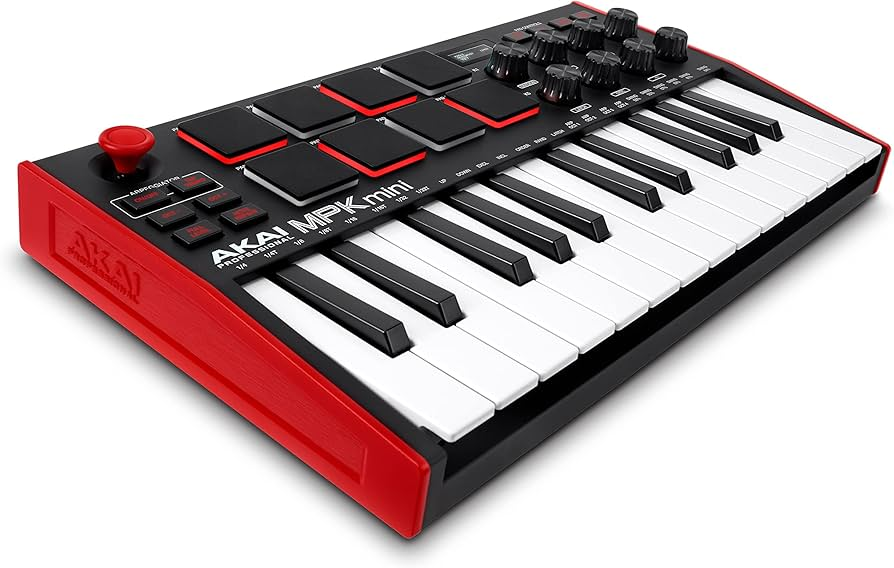
- To save time when entering MIDI, it is highly recommended to purchase a MIDI keyboard to enter notes in real time; otherwise, you must repeatedly click with a mouse.
[ ]
]
Resources & Plugins
- The official guide to using the arrangement view of Ableton Live to create music can be found online. A lot of other excellent guides are available on video platforms like YouTube and Bilibili.
- Recommended Sound Library Plugins: The Spectrasonics series. You can find affordable versions of it on 251编曲网-资源下载 (search for “四巨头合成器”). This bundle offers almost all classical instruments, customizable synthesizers, and premier keyboard sounds. With a MIDI keyboard, you can test notes instantly, which is far more convenient than manual entry and delayed listening.
- Given modern music production, tutorials for the above are ubiquitous online. Consult Anthony if you wish to achieve specific results but lack the technical means.
Mr. Anthony Stephen Landers
On campus, Anthony might just seem like a dad of two toddlers who teaches those “trivial” subjects like Peace & Sustainability and TOK, but hey, he used to run a rock band and was a serious musician before coming here to teach!
Anthony doesn’t teach you a lot of things until you ask him. Probably he just knows too much about rock and music production and doesn’t know how to structure his vast knowledge into a strict 2-year course.
- You will spend most of your class time doing your own work.
- Anthony will come check on you one or two times depending on the class size.
- Class size trends: 11 students for Co2025, 9 for Co2026, and 5 for Co2027. (Kids, go choose music!! 🎶)
Must-Dos for IB Music
How You Get Your Term Grade, Year Grade, and PGs
Each of the four portfolios mentioned earlier consists of smaller components. In Presenting Music, for example, you’ll submit two compositions and three performances.
- Anthony sets a deadline for each task, giving you about a month per task.
- Every component is graded on both your draft and final submission.
- These internal marks determine your term grade, year grade, and predicted grade (PG). He usually just mirrors the year grade for the PG.
Time Management
The possibility of getting a 7 increases strictly with the time you devote to the subject. Because components come one after another and you still need to deal with other subjects, try to make time to prepare for each component (e.g., compose 4 bars every night or practice your performance for 30 minutes).
If things become a little bit overwhelming, don’t worry too much. Anthony is usually not very strict with these deadlines, but do not ever procrastinate!
Ask Anthony (The Strategy)
At good times or bad, always ask Anthony about what to do. Whether you don’t know how to set up a synthesizer or you don’t know how to implement his feedback on your draft submission, occupy him during class time.
The strategy here is that you can only receive official written feedback once, but Anthony is happy to answer questions informally at any time. He is the one who gives you marks, so his advice is the most straightforward route to success. Provided you dedicate enough time, the key to a 7 is adjusting your composition/commentary as much as possible until Anthony has no choice but to award you that top mark.
Use IB Examples for Reference
For the commentaries, Anthony has a lot of past IB examples to share. If you don’t know how to start, simply mimic the wording of the example commentaries.
The most basic structure of a commentary (either of your own work or an existing piece of music) follows this format:
- “Composer uses [name of composing device] to create [a feeling].”
- “The feeling serves the purpose of [AOI-related purpose].”
Final Words
I would retake Music HL if I were to take IB again. It introduced me to a diverse range of genres I would have otherwise ignored and found to be pretty interesting—like experimenting with Nintendo game BGMs and using a virtual vocal sound library (V-singer) for an AoI 4 composition. Moreover, I enjoyed the process of conducting research and learning useful skills for both performance and composition. Straight 7s were just a by-product of the pleasure of creating so many things by myself.
If you are either thinking about getting a 7 in an art, or simply looking for something to enjoy in your IB journey, music is the right choice. I hope my words will help!